
Multivariable calculus study materials, often available as PDFs, provide a flexible and accessible way to master complex concepts. These resources,
like those from MIT OpenCourseWare and texts by Stewart and Lax, offer comprehensive coverage. They are invaluable for students seeking deeper understanding and efficient learning.
What is Multivariable Calculus?
Multivariable calculus, a powerful extension of single-variable calculus, delves into functions with multiple inputs and outputs. Unlike its single-variable counterpart, it explores concepts in spaces of higher dimensions – think beyond a simple number line to surfaces and volumes. This branch of mathematics is fundamental for modeling real-world phenomena involving numerous interacting variables, such as physics, engineering, economics, and computer science.
Key areas include partial derivatives, which measure the rate of change of a function with respect to one variable while holding others constant, and multiple integrals, used to calculate quantities like volume and mass over multi-dimensional regions. Vector calculus, a significant component, deals with vector fields and operations like gradient, divergence, and curl. Understanding these concepts is crucial, and readily available PDF resources, like those from MIT OpenCourseWare and texts by James Stewart and Peter Lax, can greatly aid comprehension.
Why Use PDF Study Materials?
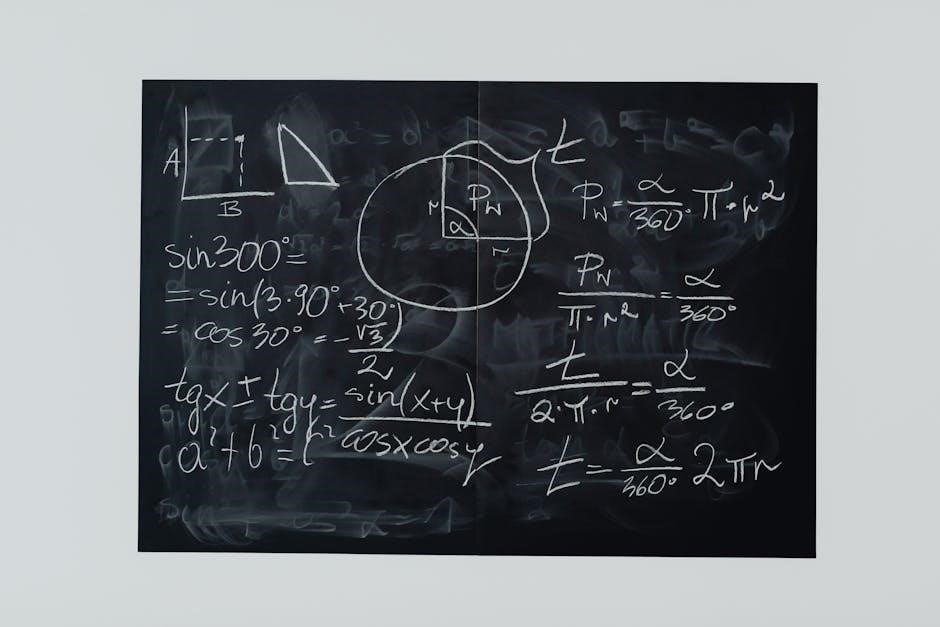
PDF study materials offer unparalleled convenience and accessibility for mastering multivariable calculus. They allow for offline study, eliminating reliance on internet connectivity, and are easily portable across devices – laptops, tablets, and smartphones. Resources like MIT OpenCourseWare’s Calculus Revisited: Multivariable Calculus PDFs, complete with pre-tests and chalkboard photographs, provide a structured learning path.
Furthermore, PDFs facilitate focused learning; you can annotate, highlight, and bookmark key concepts directly within the document. Texts like James Stewart’s and Peter Lax’s, often available in PDF format, offer comprehensive explanations and practice problems. The Internet Archive provides free access to these valuable resources, making advanced mathematical study more democratic and efficient. They are a cost-effective alternative to traditional textbooks, promoting self-paced learning.
Core Concepts in Multivariable Calculus
Multivariable calculus explores functions of several variables, partial derivatives, and vector calculus fundamentals like gradient, divergence, and curl, essential for advanced applications.
Functions of Several Variables
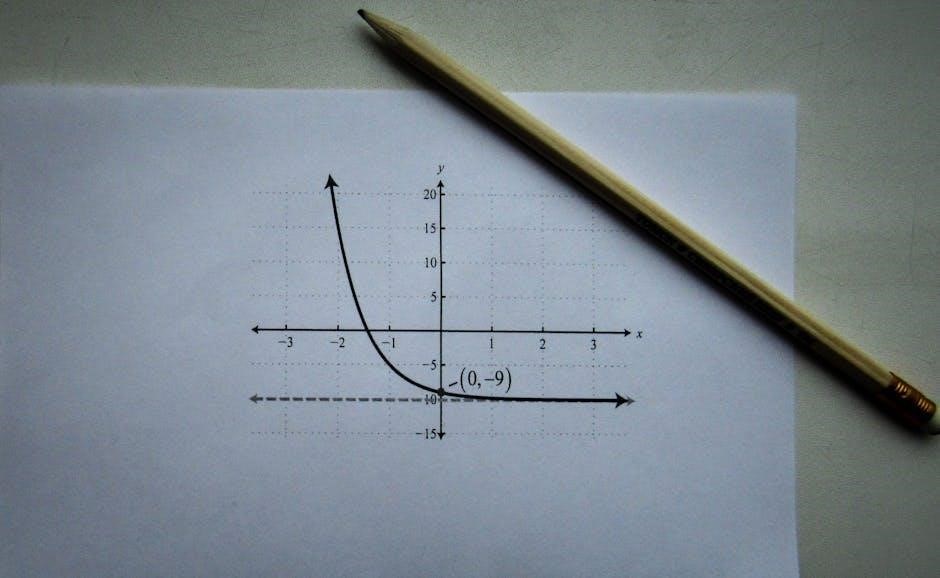
Functions of several variables represent relationships where outputs depend on multiple inputs, extending the familiar concept of single-variable functions. These functions are foundational to multivariable calculus, enabling the modeling of phenomena in three dimensions and beyond.
, delve into these topics with detailed proofs and explanations.
Peter D. Lax’s text, “Multivariable Calculus with Applications,” emphasizes comprehension, providing meaningful explanations to solidify understanding of these core concepts. Mastering functions of several variables is crucial for subsequent topics like partial derivatives and multiple integrals.
Partial Derivatives
Partial derivatives measure the rate of change of a multivariable function with respect to a single variable, holding others constant. This concept is vital for understanding how each input affects the function’s output independently. They are a cornerstone of optimization and related rates problems in multiple dimensions.
, complement this with detailed explanations and exercises.
Lax’s approach focuses on building intuition, ensuring students grasp the underlying principles rather than just memorizing formulas. A solid understanding of partial derivatives is essential for progressing to more advanced topics like the gradient and vector calculus.
Gradient, Divergence, and Curl
Gradient, divergence, and curl are fundamental vector calculus operations extending derivative concepts to multivariable functions. The gradient indicates the direction of steepest ascent, while divergence measures the “outward flow” of a vector field at a point. Curl quantifies the rotation of a vector field.
, delve into these concepts with detailed proofs and examples. James Stewart’s “Multivariable Calculus” (Ninth Edition) provides a comprehensive treatment, linking these operations to practical applications.
Peter D. Lax’s text emphasizes conceptual understanding, aiding students in visualizing these abstract ideas. Mastering these tools is crucial for solving problems in physics, engineering, and other fields.

Essential Resources: PDFs & Texts
PDF study materials and comprehensive texts from MIT OpenCourseWare, Stewart, and Lax provide robust learning pathways for mastering multivariable calculus concepts effectively.
MIT OpenCourseWare Materials
MIT OpenCourseWare offers exceptional multivariable calculus resources in PDF format, designed to supplement video lectures and textbook learning. “Calculus Revisited: Multivariable Calculus” provides detailed study guides, including pre-tests to assess understanding and photographs of every chalkboard used during lectures, enhancing comprehension.
These guides also feature assigned readings from supplementary notes and the core textbook, alongside exercises complete with solutions for self-assessment. The “Supplementary Notes” delve into prerequisite materials, offering detailed proofs and expanded treatments of key topics. Specifically, Chapter 1 introduces mathematical structure, Chapter 2 covers vector arithmetic, Chapter 3 explores vector calculus, and Chapter 4 focuses on functions of several real variables – all available as downloadable PDFs.
Calculus Revisited: Multivariable Calculus PDF
The PDF version of MIT’s “Calculus Revisited: Multivariable Calculus” is a cornerstone resource for students. It’s meticulously designed to complement the video lectures, offering a robust learning experience. The study guides included are exceptionally detailed, featuring pre-tests allowing students to gauge their existing knowledge before diving into new material.
A unique feature is the inclusion of photographs of every chalkboard used in the video series, providing a visual link to the lecture content. Reading assignments, referencing both the supplementary notes and the primary textbook, are clearly outlined. Crucially, the guides contain a wealth of exercises, complete with fully worked solutions, enabling effective self-study and practice. This PDF is a comprehensive tool for mastering multivariable calculus.
Supplementary Notes & Study Guides
MIT OpenCourseWare’s supplementary notes, available as PDFs, significantly enhance the learning process for multivariable calculus. These notes aren’t merely addenda; they provide essential prerequisite material, ensuring students possess the foundational knowledge needed to succeed. Detailed proofs are included, offering a deeper understanding of the underlying mathematical principles.
Furthermore, select topics receive more in-depth treatment than might be found in a standard textbook, catering to students who desire a more rigorous exploration. The available chapters cover crucial areas: an introduction to mathematical structure, vector arithmetic, vector calculus, and functions of several real variables. Each chapter, offered as a downloadable PDF (ranging from 2.1MB to 5.4MB), is a valuable asset for comprehensive study.
James Stewart’s “Multivariable Calculus”

James Stewart’s “Multivariable Calculus” is a widely respected and utilized textbook, frequently found in PDF format for convenient study. The ninth edition, encompassing 661-1214 pages plus appendices, provides a thorough exploration of the subject. It’s often referred to as the 9E edition. This comprehensive resource covers essential topics, including parametric equations, polar coordinates, sequences, series, and power series.
The book also delves into vectors, the geometry of space, vector functions, partial derivatives, multiple integrals, and the fundamentals of vector calculus. Available through the Internet Archive, students can freely download, borrow, and stream this valuable text, making it an accessible option for mastering multivariable calculus concepts.
Ninth Edition Content Overview
The ninth edition of James Stewart’s “Multivariable Calculus” presents a meticulously structured curriculum, often accessible as a PDF. It begins with a robust foundation in vectors and the geometry of space, progressing to vector functions and their applications. A significant portion is dedicated to partial derivatives, laying the groundwork for understanding rates of change in multiple dimensions.
Further exploration covers multiple integrals, essential for calculating volumes and averages. The text culminates in a detailed examination of vector calculus, including line integrals, surface integrals, and theorems like Green’s, Stokes’, and the Divergence Theorem. This edition, available online, provides a complete and rigorous treatment of multivariable calculus.
Parametric Equations and Polar Coordinates
James Stewart’s “Multivariable Calculus,” frequently found as a PDF resource, dedicates substantial coverage to parametric equations and polar coordinates. These tools offer alternative ways to represent curves and surfaces, expanding beyond traditional rectangular coordinate systems. Understanding parametric equations is crucial for describing motion and complex paths, while polar coordinates simplify calculations involving circular symmetry.
The ninth edition delves into techniques for converting between rectangular, parametric, and polar forms. It explores applications in areas like calculating arc length, area, and volumes of revolution. Mastery of these concepts, readily available within the PDF version, is fundamental for tackling advanced problems in multivariable calculus and related fields.
Peter D. Lax’s “Multivariable Calculus with Applications”
Peter D. Lax’s “Multivariable Calculus with Applications,” often accessible as a PDF, distinguishes itself through a strong emphasis on conceptual understanding. Unlike purely computational approaches, Lax prioritizes explaining why mathematical techniques work, fostering a deeper, more lasting grasp of the subject. This text, available via the Internet Archive, is geared towards students in mathematics and the physical sciences.
The book’s approach is particularly beneficial for self-study, as the detailed explanations illuminate the underlying principles. Finding a PDF copy allows for convenient access to this comprehensive resource, enabling students to thoroughly explore the applications of multivariable calculus and build a robust mathematical foundation.
Focus on Comprehension and Explanation
Peter D. Lax’s “Multivariable Calculus with Applications” truly shines in its dedication to fostering comprehension. The text doesn’t merely present formulas; it meticulously explains the reasoning behind them, making it an ideal resource for students who struggle with abstract concepts. Accessing a PDF version of this book allows for focused study, highlighting key explanations and revisiting challenging sections with ease.
This emphasis on understanding, rather than rote memorization, sets Lax’s work apart. It’s a valuable asset for anyone seeking a solid foundation in multivariable calculus, particularly those needing a resource that prioritizes clarity and insightful explanations. The availability of a PDF enhances accessibility and learning.

Key Techniques & Applications
Multivariable calculus PDF resources demonstrate techniques like multiple integrals and vector calculus, crucial for applications in physics, engineering, and various scientific disciplines.
Multiple Integrals

Multiple integrals, a cornerstone of multivariable calculus, extend the concept of single-variable integration to functions of several variables. PDF study materials, such as those offered by MIT OpenCourseWare and detailed in James Stewart’s “Multivariable Calculus,” provide extensive coverage of these techniques. These resources delve into evaluating double and triple integrals, essential for calculating volumes, masses, and centroids of complex shapes.
Understanding multiple integrals requires grasping iterative integration and changing the order of integration. PDF guides often include worked examples illustrating these concepts. Furthermore, they prepare students for advanced applications, including calculating flux and circulation using Green’s Theorem and Stokes’ Theorem, concepts thoroughly explained in available texts. Mastering these techniques is vital for success in various scientific and engineering fields.

Change of Variables in Multiple Integrals
Change of variables in multiple integrals, a powerful technique explored in multivariable calculus PDF resources, simplifies complex integrations by transforming coordinate systems. James Stewart’s “Multivariable Calculus” dedicates significant attention to this, detailing Jacobian determinants crucial for accurate transformations. These PDF materials demonstrate how shifting to polar, cylindrical, or spherical coordinates can dramatically ease calculations.
Understanding the Jacobian is paramount; it accounts for the distortion introduced by the coordinate change. PDF study guides often provide step-by-step examples, illustrating how to correctly apply this technique. Mastering this skill is essential for evaluating integrals over non-rectangular regions and solving problems in physics and engineering, as highlighted in available texts and online repositories.

Vector Calculus Fundamentals
Vector calculus fundamentals, comprehensively covered in multivariable calculus PDF materials, build upon single-variable calculus, extending concepts to vector fields. Resources like MIT OpenCourseWare’s supplementary notes delve into gradient, divergence, and curl – essential operators for analyzing vector functions. These PDFs often present detailed proofs and applications, fostering a deeper understanding of these concepts.
Peter D. Lax’s “Multivariable Calculus with Applications” emphasizes comprehension, offering clear explanations of line integrals, surface integrals, and theorems like Green’s, Stokes’, and the Divergence Theorem. Mastering these fundamentals, readily available in PDF format, is crucial for solving problems in fluid dynamics, electromagnetism, and other advanced fields, making these resources invaluable.

Finding and Utilizing Multivariable Calculus PDFs
PDFs from MIT OpenCourseWare, the Internet Archive, and textbook companions offer accessible learning. Legal downloads ensure copyright compliance, optimizing study habits effectively.
Online Repositories and Archives
Numerous online platforms serve as valuable repositories for multivariable calculus PDF study materials. The Internet Archive, for instance, hosts digitized versions of classic textbooks like James Stewart’s “Multivariable Calculus” (9th edition) and Peter D. Lax’s “Multivariable Calculus with Applications,” enabling free download, borrowing, and streaming.
MIT OpenCourseWare stands out as a premier resource, providing comprehensive course materials, including detailed study guides, pre-tests, and solutions to exercises. These guides accompany video lectures and supplementary notes, offering a robust learning experience. Accessing these archives requires a stable internet connection and, occasionally, free account registration. Always verify the source’s reliability and ensure the materials align with your course syllabus. Utilizing these resources effectively can significantly enhance your understanding of multivariable calculus concepts.
Legal Considerations & Copyright
When utilizing multivariable calculus PDF materials sourced online, respecting copyright laws is paramount. Downloading copyrighted textbooks or solutions manuals without proper authorization constitutes infringement. Resources from MIT OpenCourseWare are generally freely available for educational purposes, but redistribution may be restricted.
The Internet Archive offers materials under various licenses; carefully review the usage terms before downloading or sharing. Always prioritize legally obtained resources, such as those purchased directly from publishers or accessed through institutional subscriptions. Be cautious of websites offering unauthorized copies, as these may contain malware or inaccurate information. Understanding and adhering to copyright regulations ensures ethical and legal access to valuable learning materials.
Optimizing PDF Study Habits
Effectively studying multivariable calculus PDFs requires a strategic approach. Utilize PDF annotation tools to highlight key concepts, add notes, and work through examples directly on the document. Organize downloaded materials into a clear folder structure for easy access. Supplement PDF study with practice problems from textbooks like Stewart’s “Multivariable Calculus” and utilize supplementary notes.
Regularly review material and actively engage with the content, rather than passively reading. Break down complex topics into smaller, manageable sections. Combine PDF study with video lectures from resources like MIT OpenCourseWare for a multi-faceted learning experience. Consistent, focused study sessions will maximize comprehension and retention.