
Jeff Nippard Upper Lower PDF: A Comprehensive Guide
Jeff Nippard’s Upper Lower program, detailed in a comprehensive PDF, offers a 4x weekly split focused on size and strength gains.
It’s a structured approach, prioritizing adjustable volume and addressing individual weak points for optimal results.
Jeff Nippard’s Upper/Lower program is a meticulously designed training regimen gaining significant traction within the fitness community. This 4x per week split, comprehensively outlined in a downloadable PDF, isn’t just another workout plan; it’s a system built on scientific principles and practical application. The core philosophy centers around maximizing muscle hypertrophy and strength development through a balanced approach to training frequency and volume.
Unlike many programs, Nippard’s method emphasizes individualization. The PDF details how to identify and address personal weak points, allowing users to tailor the program to their specific needs. It’s a departure from generic routines, offering a pathway to sustainable progress. The program’s structure is designed for intermediate to advanced lifters, though adaptable for motivated beginners. It’s a robust framework for building a well-rounded physique.
Program Overview and Philosophy
The Jeff Nippard Upper/Lower program, detailed within its PDF guide, operates on the principle of maximizing mechanical tension and metabolic stress. It’s a four-day split, strategically dividing workouts to allow for adequate recovery while maintaining a high training frequency. The philosophy isn’t about chasing novelty, but rather consistently applying proven training methodologies.
A key tenet is progressive overload – systematically increasing the demands placed on the muscles over time. The PDF emphasizes utilizing the RPE (Rate of Perceived Exertion) scale to autoregulate training intensity, ensuring optimal stimulus without overtraining. Furthermore, the program champions a focus on proper exercise selection and technique. It’s designed to build a foundation of strength and size, prioritizing compound movements while incorporating isolation exercises to address specific muscle groups and weaknesses.
The 4x Per Week Training Split
Jeff Nippard’s Upper/Lower program utilizes a 4x per week training split, offering a balance between frequency and recovery. This structure allows for dedicated focus on both upper and lower body muscle groups, twice each week. The split is designed to maximize muscle protein synthesis and promote consistent progress.
Typically, the schedule involves two Upper body days and two Lower body days, strategically spaced throughout the week. This arrangement facilitates sufficient rest for each muscle group, crucial for adaptation and growth. The PDF guide details a specific weekly layout, but flexibility is encouraged to accommodate individual schedules. This split is ideal for intermediate to advanced lifters seeking a structured, yet adaptable, approach to building strength and hypertrophy, as outlined in the program documentation.
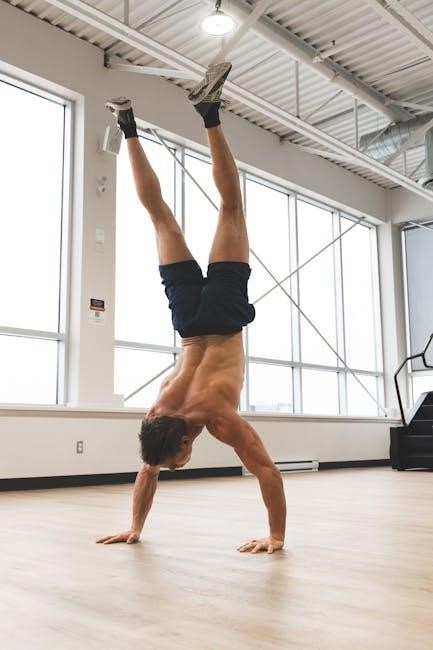
Program Details & Structure
Jeff Nippard’s Upper/Lower program centers around a strategic split, emphasizing progressive overload, RPE-based training, and customized volume to maximize results effectively.
Understanding the Upper/Lower Split
Jeff Nippard’s Upper/Lower split divides training sessions by muscle groups, dedicating specific days to upper body pushing and pulling movements, and separate days for lower body work. This approach allows for focused intensity and adequate recovery for each muscle group.
Unlike full-body routines, or even push/pull/legs, this split enables higher training volume per muscle group per week, crucial for hypertrophy and strength development. The program’s structure ensures sufficient frequency – hitting each muscle group twice weekly – which is optimal for consistent progress.
This split is particularly effective for intermediate to advanced lifters seeking to break plateaus and build significant muscle mass. It’s a balanced system, promoting both strength gains and aesthetic improvements, while remaining manageable within a 4-day training schedule.
Weekly Schedule Breakdown (Days 1-4)
Jeff Nippard’s Upper/Lower program follows a structured 4-day weekly schedule. Day 1 is dedicated to a strength-focused lower body session, establishing a foundation with exercises like back squats. Day 2 targets the upper body, emphasizing pushing movements – chest and shoulders.
Day 3 revisits the lower body, shifting towards hypertrophy with variations and accessory work. Finally, Day 4 completes the cycle with an upper body pull day, concentrating on back and biceps. Rest days are strategically placed to facilitate recovery and prevent overtraining.
The PDF outlines specific exercises, sets, reps, and RPE ranges for each day. This detailed breakdown ensures consistent progression and allows for personalized adjustments based on individual needs and weak points. The schedule is designed for optimal muscle protein synthesis and adaptation.

Exercise Selection Principles
Jeff Nippard’s program prioritizes exercises with a high degree of muscle activation and carryover to real-world strength. Compound movements, like squats, deadlifts, bench press, and rows, form the core of the program, maximizing efficiency.
Exercise selection also considers anatomical variations and individual leverages. Nippard advocates for variations that allow individuals to effectively target specific muscle groups. The PDF emphasizes a balance between horizontal and vertical pushing/pulling movements to ensure comprehensive development.
Furthermore, the program incorporates both free weight and machine exercises, leveraging the benefits of each. Free weights promote stability and coordination, while machines offer controlled resistance and isolation. This thoughtful approach optimizes muscle growth and minimizes injury risk.
RPE (Rate of Perceived Exertion) Scale Explained
Jeff Nippard’s Upper Lower program utilizes the RPE scale to personalize intensity, moving away from strict percentages of one-rep max. RPE, ranging from 6 to 10, gauges how difficult a set feels. An RPE of 7 means you could perform approximately 3 more reps with good form, while an RPE of 9 suggests only 1-2 reps remain.
This subjective measure accounts for daily fluctuations in fatigue and recovery. The PDF details how to accurately assess RPE, emphasizing honest self-evaluation. It’s crucial to differentiate between discomfort and technical failure.
Using RPE allows for auto-regulation, ensuring you’re challenging yourself appropriately without overreaching. Nippard stresses that RPE is a skill developed with practice, leading to more effective and sustainable progress.
Sets, Reps, and Rest Periods
Jeff Nippard’s Upper Lower program employs a strategic approach to sets, reps, and rest, varying based on the exercise and goal. Generally, compound movements utilize 3-4 sets of 6-10 reps, prioritizing strength and hypertrophy. Isolation exercises typically involve 3 sets of 10-15 reps, focusing on muscle activation and volume.
The PDF emphasizes the importance of controlled tempo and full range of motion. Rest periods are also prescribed, ranging from 3-4 minutes for heavy compound lifts to 60-90 seconds for isolation work.
These guidelines aren’t rigid; adjustments are encouraged based on individual recovery and RPE. Nippard advocates for listening to your body and prioritizing quality reps over simply completing the prescribed volume.
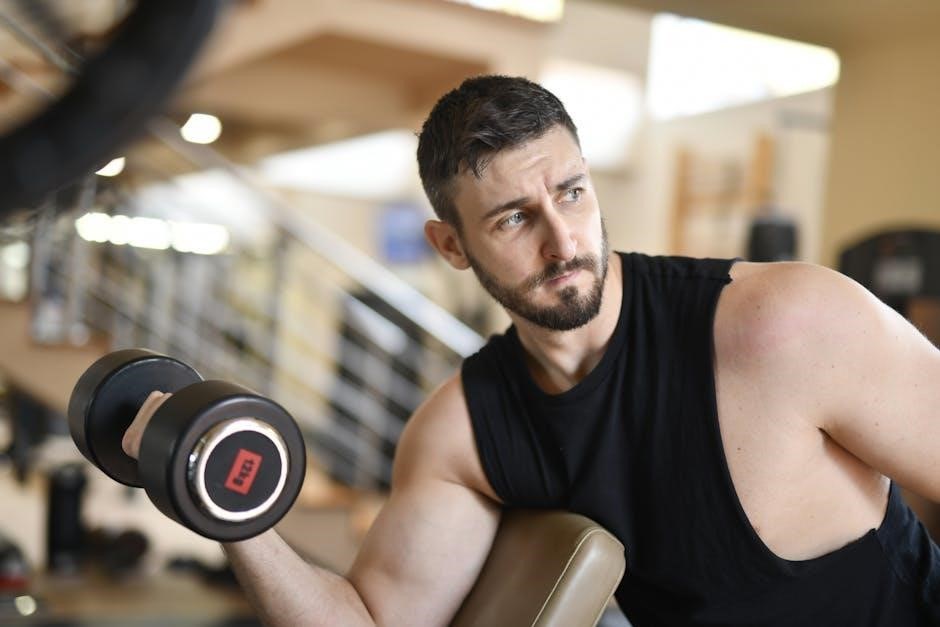
Key Exercises & Muscle Focus
Jeff Nippard’s program strategically selects exercises to target specific muscle groups during upper and lower body days, maximizing hypertrophy and strength development.
Upper Body Day Exercises
Jeff Nippard’s upper body workouts are designed for comprehensive development, focusing on both pushing and pulling movements. The program emphasizes targeting the chest, back, and shoulders with a variety of exercises.
Chest exercises are divided to hit both the upper and lower pectoral heads, utilizing incline and flat pressing variations. Back work prioritizes both width – through exercises like pull-ups and lat pulldowns – and thickness, employing rows.
Shoulder training is equally detailed, addressing the anterior, lateral, and posterior deltoids for balanced development. This ensures a well-rounded physique and minimizes imbalances. The PDF provides specific exercise selections and progression schemes for each muscle group, allowing for customization based on individual needs and weak points.
Chest Exercises (Upper & Lower Pec Focus)
Jeff Nippard’s chest training within the Upper Lower program strategically targets both the upper and lower pectoral muscles. He divides exercises to effectively stimulate each region for complete chest development.
For the upper chest, incline dumbbell presses and incline barbell presses are key, as the clavicular head originates on the clavicle. To hit the lower chest, flat dumbbell presses and flat barbell presses are prioritized, targeting the sternal head originating on the sternum.
The PDF details variations like decline presses and cable flyes for further isolation. Nippard emphasizes proper form and controlled movements to maximize muscle activation and minimize injury risk, ensuring balanced and proportional chest growth.
Back Exercises (Width & Thickness)
Jeff Nippard’s Upper Lower program dedicates specific exercises to build both back width and thickness, crucial for a well-developed physique. The PDF outlines a balanced approach to target all back muscles effectively.
For width, pull-ups (or lat pulldowns) are foundational, stretching the lats horizontally. Rows, including barbell rows and dumbbell rows, are central for building thickness, drawing the elbows back and engaging the rhomboids and traps.
Variations like seated cable rows and face pulls are included for nuanced stimulation. Nippard stresses maintaining a neutral spine and controlled movements throughout each exercise, maximizing muscle fiber recruitment and preventing injury. Proper form is paramount for optimal back development.
Shoulder Exercises (Anterior, Lateral, Posterior)
Jeff Nippard’s Upper Lower program emphasizes balanced shoulder development, addressing the anterior, lateral, and posterior heads. The PDF details exercises to sculpt well-rounded, aesthetically pleasing shoulders and prevent imbalances.
Anterior deltoids are targeted with overhead pressing variations – barbell, dumbbell, or machine. Lateral deltoids receive focus through lateral raises, prioritizing controlled movements and a slight bend in the elbows. Posterior deltoid work includes face pulls and reverse flyes, crucial for shoulder health and posture.
Nippard advocates for mindful execution, avoiding excessive weight and maintaining proper form. He highlights the importance of scapular retraction during exercises to maximize deltoid activation and minimize risk of injury.
Lower Body Day Exercises
Jeff Nippard’s Upper Lower program dedicates specific days to comprehensive lower body training, outlined in the accompanying PDF. These sessions prioritize both strength and hypertrophy, targeting quads, hamstrings, glutes, and calves.

Exercises are strategically selected to maximize muscle fiber recruitment. Expect variations of squats – back, front, and goblet – alongside Romanian deadlifts and hamstring curls. Glute activation is achieved through hip thrusts and glute bridges, emphasizing a full range of motion.
The program incorporates adjustable volume, allowing individuals to focus on lagging muscle groups. Nippard stresses proper form and progressive overload as key principles for consistent lower body gains.
Quadriceps Focused Exercises
Jeff Nippard’s Upper Lower PDF program emphasizes quadriceps development through a variety of effective exercises. Back squats are a cornerstone, building overall lower body strength and mass. Front squats are included to specifically target the quads with a greater emphasis on the upper portion.
Goblet squats offer a beginner-friendly variation, promoting proper form and quadriceps activation. Leg presses provide a controlled environment for heavy loading, while leg extensions isolate the quads for focused hypertrophy.
Nippard advocates for varying rep ranges and utilizing techniques like drop sets to maximize muscle fiber recruitment. The program’s adjustable volume allows for increased quad work if this is a weak point.
Hamstring & Glute Focused Exercises

Jeff Nippard’s Upper Lower PDF program dedicates significant attention to hamstring and glute development, crucial for balanced lower body strength. Romanian Deadlifts (RDLs) are a primary exercise, emphasizing the hamstring stretch under load and promoting posterior chain strength.
Hip thrusts, both barbell and banded variations, are included to directly target the glutes for maximal activation and hypertrophy. Good mornings are another key exercise, further challenging the hamstrings and lower back.
Nippard also incorporates glute-ham raises (GHRs) for advanced lifters, offering a highly effective but demanding hamstring and glute exercise. Adjusting volume based on individual weak points is encouraged, allowing for prioritized glute and hamstring work.
Calf Exercises
Jeff Nippard’s Upper Lower PDF program recognizes the importance of calf development, often a neglected muscle group. Standing calf raises, performed with a full range of motion, are a staple, targeting both the gastrocnemius and soleus muscles.
Seated calf raises are also included, specifically isolating the soleus, which is more active with the knee bent. Nippard emphasizes varying rep ranges and utilizing both straight-leg and bent-leg variations to ensure complete calf development.
The program allows for additional calf volume for individuals identifying calves as a weak point. This customization ensures targeted growth and addresses potential imbalances. Prioritizing consistent, focused calf work is key to achieving noticeable results.
Program Customization & Weak Point Training
Jeff Nippard’s program allows for personalized adjustments, enabling users to prioritize and develop specific weak areas through added volume and targeted exercises.
Identifying Your Weak Points
Jeff Nippard’s Upper Lower program emphasizes self-assessment to pinpoint areas needing improvement. Before commencing, dedicate time to honestly evaluate your physique and performance. Consider which muscle groups lag in development or limit your progress on compound lifts.
Record your lifts and compare them to established norms or your own goals. Are you struggling with squat depth, bench press lockout, or pull-up strength? Visual assessment – comparing muscle size in a mirror – can also be insightful.
Be objective; avoid ego or wishful thinking. Identifying 2-3 key weak points allows for focused volume adjustments within the program. This targeted approach maximizes efficiency and ensures balanced development, ultimately leading to greater overall strength and a more aesthetically pleasing physique.
Adjustable Volume for Weak Body Parts
Jeff Nippard’s Upper Lower program isn’t rigid; it’s designed for personalization. Once you’ve identified your weak points, strategically increase training volume for those specific muscle groups. This can involve adding extra sets to existing exercises or incorporating new exercises targeting the lagging areas.
For example, if biceps are a weakness, add an additional bicep curl variation to Upper Body days; Similarly, if calves need work, include extra calf raises on Lower Body days. Prioritize quality over quantity – maintain proper form even with increased volume.
The PDF guides you to consistently train these areas, ensuring they receive adequate stimulus for growth. Remember to monitor your recovery and adjust volume accordingly to avoid overtraining.
Bicep & Calf Emphasis Strategies
Jeff Nippard’s Upper Lower program allows for targeted emphasis on often-neglected muscle groups like biceps and calves. For biceps, consider adding 2-3 sets of concentration curls or hammer curls to Upper Body days, focusing on a strong mind-muscle connection.
For calves, incorporate standing calf raises and seated calf raises on Lower Body days. Varying foot position (toes in, toes out, straight) targets different calf muscles. Prioritize full range of motion and controlled movements.
The PDF suggests consistently applying this extra volume to your chosen weak points. Remember, progressive overload is key – gradually increase weight or reps over time. Listen to your body and adjust as needed.
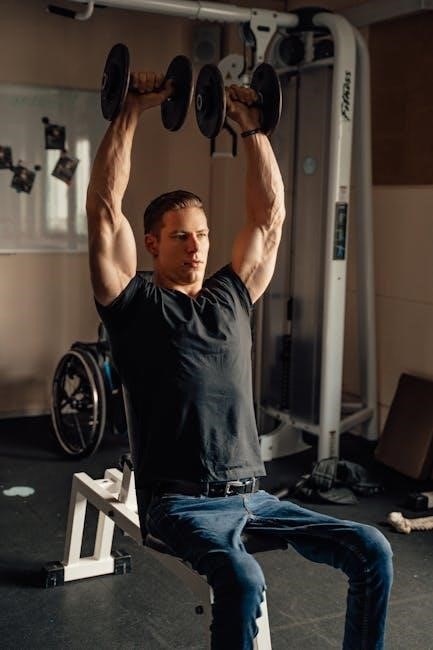
Important Considerations & Disclaimer
Jeff Nippard’s program is not medical advice; consult a physician before starting. The PDF is intellectual property and shouldn’t be redistributed without consent.
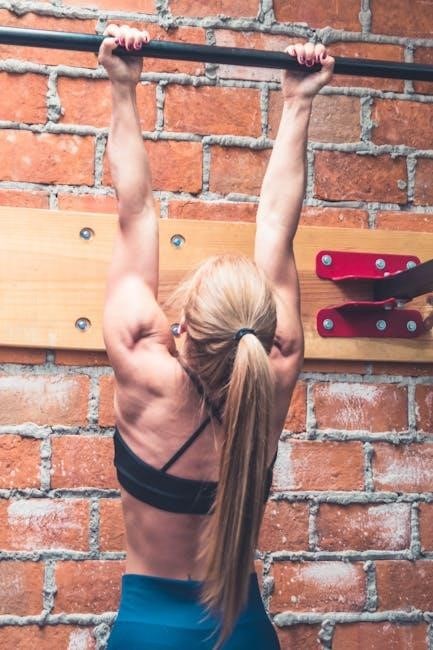
Medical Disclaimer & Consultation
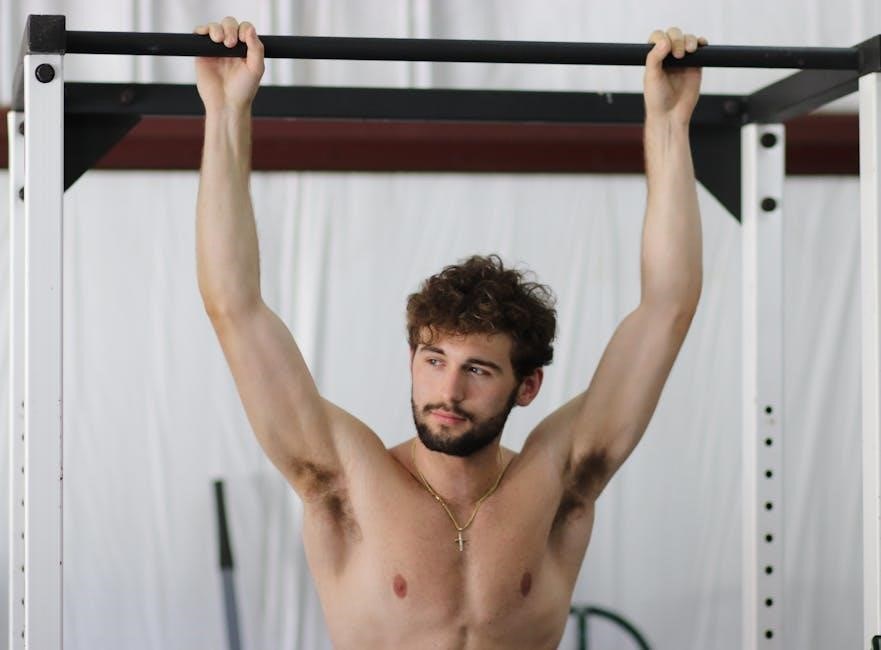
Jeff Nippard explicitly states he is not a doctor or registered dietitian. Therefore, the content within the Upper Lower PDF program should not be interpreted as medical advice. It is not designed to diagnose, treat, cure, or prevent any health issue, nor should it replace guidance from a qualified healthcare professional.
Prior to commencing this, or any new exercise program, it is absolutely crucial to consult with your physician or a qualified health professional. This consultation ensures the program is appropriate for your individual health status, physical condition, and any pre-existing medical conditions you may have.
Always prioritize your health and safety. Use the information provided responsibly and in conjunction with professional medical advice. Ignoring this disclaimer and proceeding without consultation is done entirely at your own risk.
Intellectual Property & Program Distribution
The Jeff Nippard Upper Lower PDF program, and all associated documents exchanged between Jeff Nippard and clients, are the exclusive intellectual property of STRCNG Incorporated. This means the content is legally protected and cannot be copied, sold, published, posted online, or redistributed in any form – whether partially or in its entirety – without explicit written consent from Jeff Nippard himself.

Unauthorized distribution constitutes a violation of copyright law and is strictly prohibited. Sharing the PDF with others, even without monetary gain, is a breach of the terms of use.
Respecting intellectual property rights ensures the continued creation and availability of high-quality fitness resources. If you wish to share information about the program, please direct individuals to the official source for legitimate access.
Program Safety Guidelines
Prior to commencing the Jeff Nippard Upper Lower program, a thorough understanding of proper exercise technique is crucial. Ensure you’re familiar with each exercise and can perform it safely with good form before adding weight. Warm-up adequately before each session, focusing on dynamic stretching relevant to the exercises planned.
Listen to your body and don’t push through pain. The RPE scale is a tool to guide intensity, but prioritize safety over hitting specific numbers. Proper rest and recovery are essential; adhere to the recommended rest periods between sets and allow sufficient time for muscle recovery between workouts.
If you experience any discomfort or injury, immediately stop the exercise and consult a qualified healthcare professional. This program is not suitable for everyone; consider your current fitness level and any pre-existing conditions.
Accessing the Full PDF Program Document
The complete Jeff Nippard Upper Lower program PDF document, containing detailed workout plans, exercise demonstrations, and supplementary information, is typically available through Jeff Nippard’s official website and associated platforms. Access often requires a purchase or subscription to his training resources.
Be cautious of unauthorized sources offering the PDF, as these may contain outdated or inaccurate information, or even pose security risks. Jeff Nippard explicitly states that his materials are intellectual property and should not be illegally distributed.
Purchasing directly from his official channels ensures you receive the most current version and supports his work. Look for links on his website, social media profiles, or through his email newsletter. The 16-page document from Northeast Wisconsin Technical College is an example of the program’s structure.